


Kingfishers, cormorants and turtles in the Ruhr floodplains, hundreds of kilometres of hiking and cycling trails through Essen and the Ruhr region, action-packed water sports on Baldeneysee, fascinating industrial heritage at the UNESCO World Heritage Site Zollverein, works by Van Gogh at Museum Folkwang—the Museum of the Year, picturesque historic old towns, art, culture and theatre, from the smallest venue to Germany’s largest listed cinema auditorium—it’s all possible in Essen! Experience the variety of a visit to Germany’s third-greenest city. Whether you’re planning a short break or a full holiday, our tips will help you find your way around and make your stay unforgettable. We promise!
Day 1
Sightseeing on the open-top bus—please board
A tour of Essen on Reviertouristik’s double-decker open-top bus is the perfect way to start your first day. The two-hour tour offers a great insight into Essen’s transformation from a centre of the mining and steel industry into a modern hub for business, trade and services in the heart of the Ruhr region. Along the way, you’ll pass the UNESCO World Heritage Site Zollverein , the listed Margarethenhöhe Garden City and Villa Hügel.
Curtain up—cinema doesn’t get more diverse than this
Essen boasts an outstanding cinema culture. It includes arthouse cinemas such as Astra Theater , Filmstudio Glückauf , Eulenspiegel , Galerie Cinema and the legendary Lichtburg Essen , Germany’s largest cinema with 1,250 seats and a popular venue for premieres featuring international stars. This listed movie palace from the 1920s, one of Germany’s most popular cinemas, also regularly hosts concerts, readings, cabaret and theatre performances alongside its film screenings. It’s the perfect place to round off an evening in Essen. A must for cult-film lovers: Galerie Cinema, the Ruhr region’s smallest and oldest arthouse cinema, with 45 seats, has screened the classic film “Harold and Maude” every Sunday for more than 40 years.
Day 2
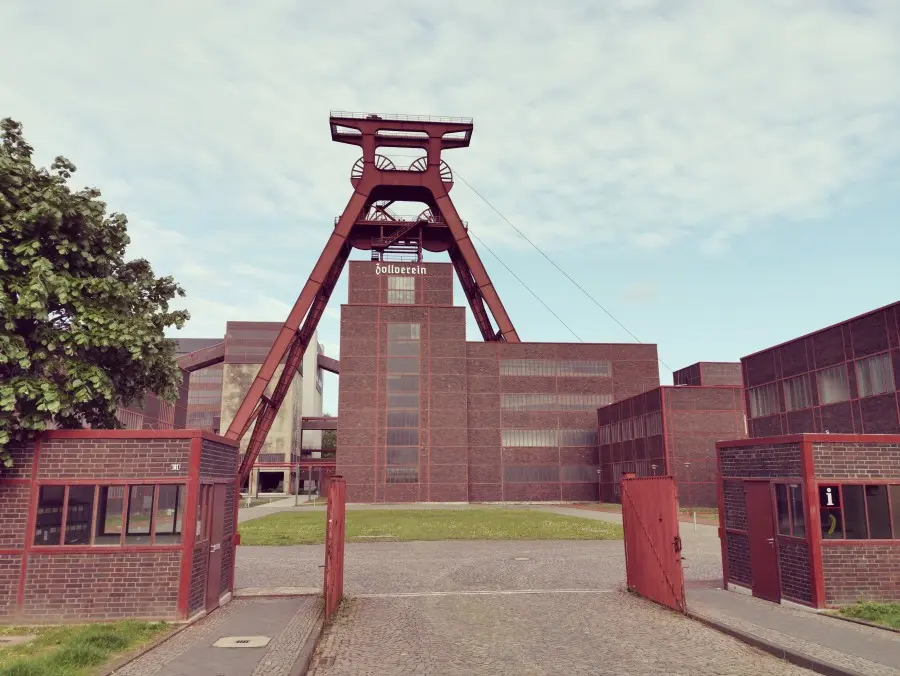
UNESCO World Heritage Site Zollverein—experience the past and present
A visit to Zeche Zollverein , a UNESCO World Heritage Site and an emblem of the Ruhr region, definitely belongs on your to-do list. Where hard work once took place, you can now discover what is perhaps the most fascinating site of industrial history: mining, design, architecture, culture and nature. Explore the site on foot, by bike or on an electric bus tour that includes a short guided tour.
Also located amid this historic industrial architecture is the Ruhr Museum and the Red Dot Design Museum. Opened in 2010, the year Essen was European Capital of Culture (RUHR.2010), the Ruhr Museum’s permanent exhibition is dedicated to the natural and cultural history of the entire Ruhr region. Spread across five floors, the Red Dot Design Museum presents the world’s largest exhibition of contemporary design. Featuring innovative objects from around 45 countries, the museum is ranked among the world’s top eight design museums. So if you have a little time left, or the weather isn’t cooperating, a visit is well worth it!
Restaurants, bars and kiosks – wind down at the end of the day
What better way to wind down at the end of the day than with a lovely meal at a restaurant? The city’s multicultural character—more than 170 nationalities have made their home in Essen—is also reflected in its dining scene. The range stretches from local to Middle Eastern dishes, from chips with currywurst to caviar, and from a quick snack to a multi-course meal at one of the four Michelin-starred restaurants.
You’ll find a wide variety of independent bars, for example, in the lively district of Rüttenscheid. On the “RÜ”—Rüttenscheider Straße—there’s truly a place to suit every taste. Tip: Kiosks are an integral part of the street scene in the Ruhr region. Whether you’re stopping by for a mixed bag of sweets or an after-work beer, be sure to pop in during your visit!
Day 3
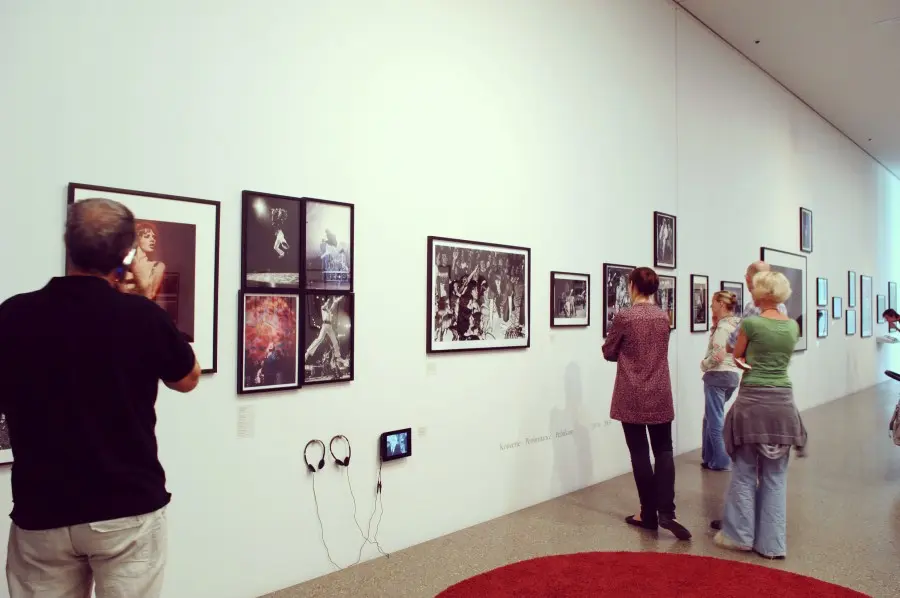
MUSEUM FOLKWANG, MUSEUM OF THE YEAR – VAN GOGH, MONET & PICASSO
Four works by Van Gogh and free admission – you’ll find that only at the Museum Folkwang, one of Germany’s most important art museums and an absolute must on your to-do list when you’re in Essen. Its outstanding collection, which features works by Monet, Cézanne, Picasso, Klee, Rodin and Rothko as well as Van Gogh, is a cultural highlight. Alongside art from the 19th century through to classical modernism, the museum regularly presents major exhibitions and temporary shows.
Fancy a bite to eat? After your museum visit, you can also stop by the on-site restaurant.
Gartenstadt Margarethenhöhe – like stepping into another world
On the third day of your trip, we recommend taking a stroll through the historic Gartenstadt Margarethenhöhe. This idyllic district, which was developed between 1909 and 1938, is considered the finest example of the German garden city concept. Although the estate forms a unified whole, hardly any two houses are alike; there’s something new to discover around every corner. See for yourself!
Our tip: Take a tour of a model apartment furnished in the historic style. You can visit it only as part of guided tours.
By the way: From Maggihöhe, as locals call the district, it’s only about a 10- to 15-minute walk to Grugapark. For garden lovers, combining a visit to Margarethenhöhe with Gruga is highly recommended. More on that later.
Day 4
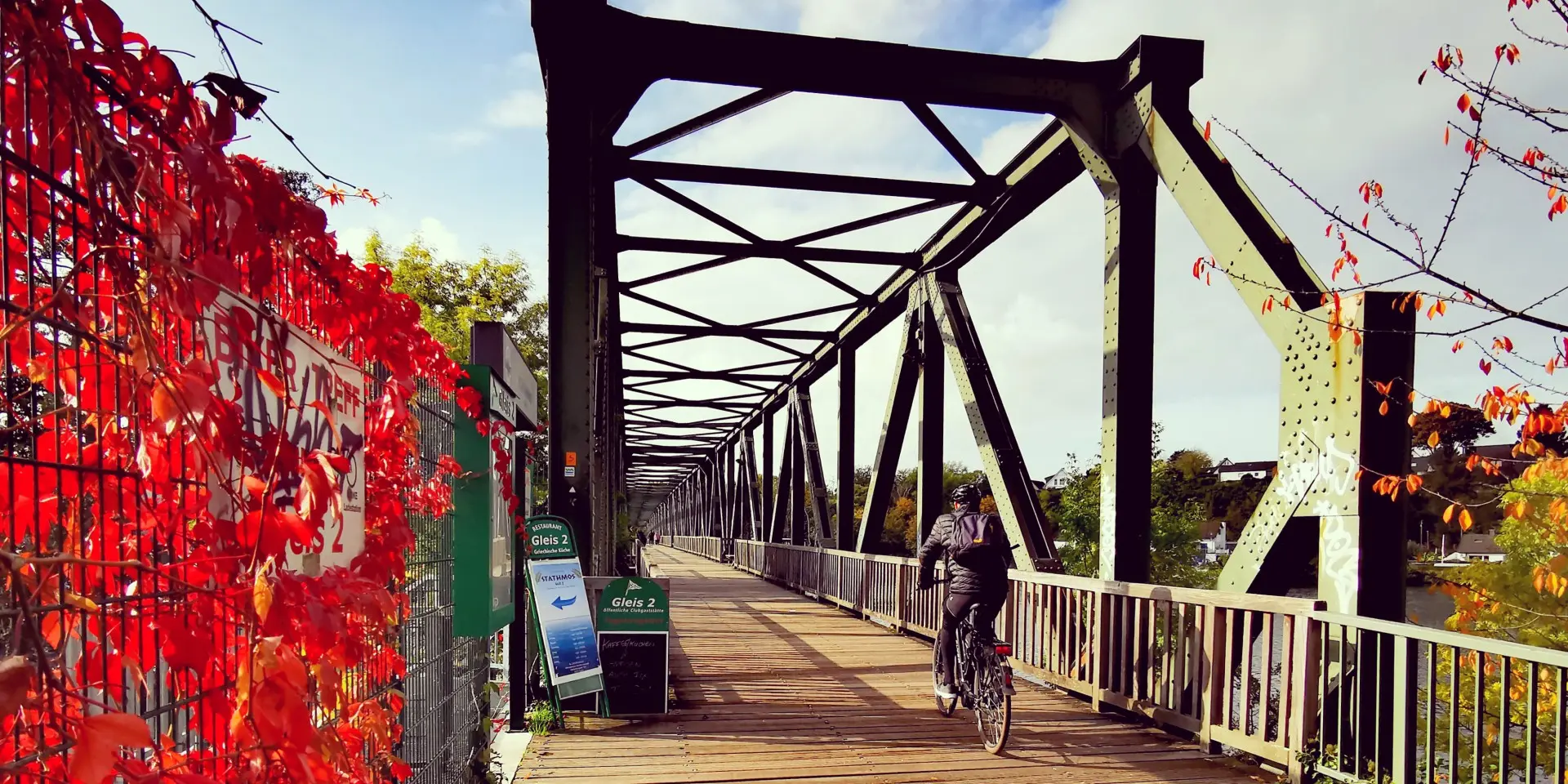
Cycling tourism in Essen and the Ruhr region – I want to ride my bicycle
Ride around 260 km across Essen – with its extensive network of cycle paths, it’s no problem at all. Industrial heritage, parks, forests and fields, as well as the vibrant city life—all of this is ideal to explore by bike. Much of the network was built along disused railway lines, where coal and steel were transported until just a few decades ago. It’s also a great way to explore the Ruhr region around Essen, since the cycle paths don’t stop at city limits!
Our tips for a day tour: Beer Garden Tour North: 43 km, Railway Line Tour: 40 km, Colliery Tour: 38 km, Krupp Tour: 31 km
You can find more tours, including shorter ones, here
You can rent bicycles here
Day 5
In the south of the city – Baldeneysee and Villa Hügel
The Baldeneysee in southern Essen, dammed in 1931 as a water reservoir and to purify the Ruhr water, is now a recreational area for people from across the region. The lake is ideal for walking, cycling or inline skating along its 14.7 km route, and offers a varied and charming natural and industrial cultural landscape. A bird sanctuary with cormorants and kingfishers, the historic Hespertalbahn , the former Carl Funke colliery and, on the hills, Villa Hügel are just some of the highlights to admire on a circuit around the lake. Numerous cafés and restaurants invite you to stop for a bite. If you enjoy being on the water, you can set sail aboard a boat operated by Weiße Flotte Baldeney. Sailors, canoeists, surfers and stand-up paddleboarders will also find excellent conditions for water sports here.
Villa Hügel, the former residence of the Krupp entrepreneurial family and, with 269 rooms, the world’s largest single-family home, attracts thousands of visitors from all over the world every year. Be sure to plan a visit to the villa and Hügel Park, laid out in the style of an English landscape garden—guided tours are also available. Nowhere else will you enjoy a more magnificent view of the Baldeneysee.
In the south of Essen are the historic districts of Kettwig and Werden . Kettwig is Essen’s youngest district—it was incorporated into the city relatively late—and an absolute gem, with its numerous half-timbered houses and charming little lanes. On guided tours of the district, night-watchman tours and sculpture park tours, you can learn more about the district and its lively history as a centre of the cloth-making trade.
The historic old town of Werden lies directly on the Ruhr Valley, on the northern edge of the Bergisches Land, and is ideal for a short stroll. The renowned Folkwang University of the Arts is based here. Many talented musicians and dancers studied here and went on to become internationally renowned artists.
Day 6
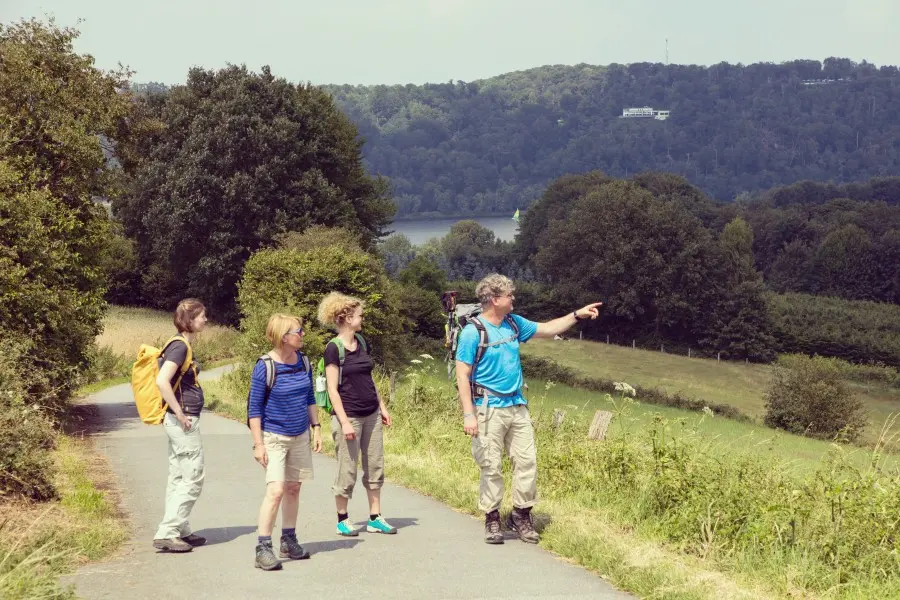
Hiking holiday in Essen – close to nature
On the penultimate day of your trip, we recommend a long hike. A long hike in a large city like Essen? Yes, it’s possible here! You can hike two trails in Essen.
The BaldeneySteig, a 26.7 km circular trail around the Baldeneysee, offers a unique nature experience along its well-marked hiking paths. The scenery along the trail itself is wonderfully varied. While steep forests, narrow paths and magnificent views dominate the northern shore of the lake, the south is characterised by wide-open fields and traces of the mining heritage.
26.7 km is too far for you? The boats of the Weißen Flotte Baldeney GmbH , the Hespertalbahn and public transport make it possible to hike part of the trail. This also means you can choose any starting point.
Download the hiking map: BaldeneySteig (PDF, 8 MB)
At around 35 kilometres, the Kettwiger PanoramaSteig, north and south of the Ruhr, is a little longer than the BaldeneySteig and also requires a bit more stamina. The trail’s stunning landscape is characterised by hilly, sometimes steep woodland, agricultural areas and residential neighbourhoods. There are plenty of places to stop for refreshments.
You should set aside a whole day for this trail.
Download the hiking map: Kettwiger PanoramaSteig (PDF, 17 MB)
For both tours, we recommend wearing good hiking boots. Our tip: You can combine the Kettwiger PanoramaSteig with the BaldeneySteig – that makes around 60 kilometres on foot through what may be Essen’s most beautiful corners.
You can find more hikes in Essen, including shorter ones, here (PDF, 1 MB)
Day 7
Grugapark Essen – the city’s green lung
The Grugapark in the district of Rüttenscheid covers around 60 hectares, making it one of Europe’s largest and most beautiful urban parks, and welcomes more than 1 million visitors every year. Young and old, culture lovers, nature enthusiasts and sports fans all enjoy the park as a place to relax and unwind. Vast lawns bordered by mature trees, tropical greenhouses, numerous sculptures and statues, themed gardens and a graduation tower are just some of the highlights that make this park truly unique. Be sure to include a visit to the park in your plans.
Tip: If you love parks and gardens, we recommend visiting Borbecker Schlosspark in the north of the city, as well as the 150-year-old Hügelpark at Villa Hügel
Essen Cathedral Treasury – a church treasury of European significance
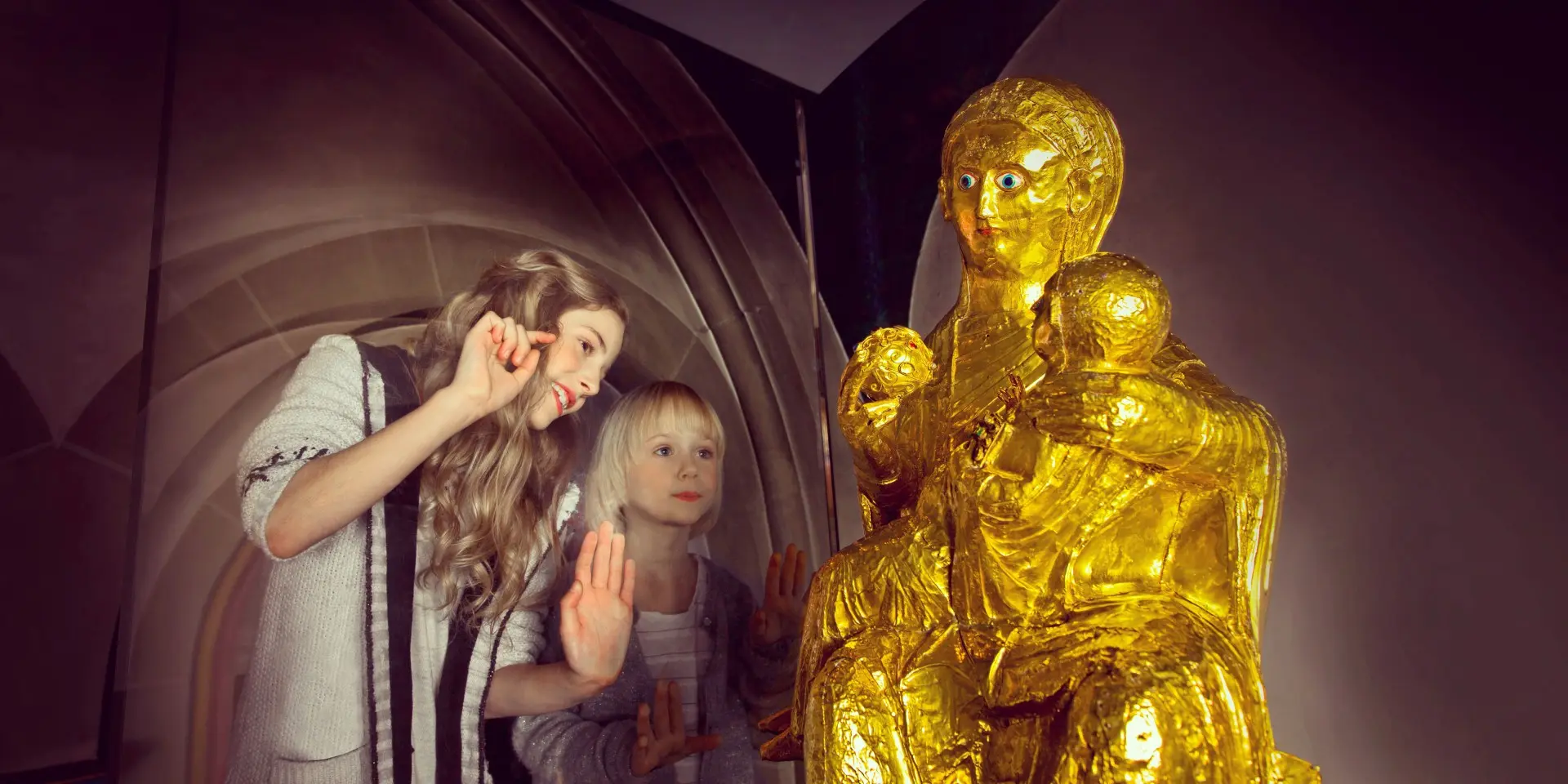
In the heart of the city stands the Essen Cathedral with its Cathedral Treasury , home to artworks of immeasurable value—including precious reliquaries, Ottonian processional crosses, Europe’s oldest lily crown, and a ceremonial sword even linked to Emperor Otto the Great. The highlight of the cathedral is the Golden Madonna , the world’s oldest fully sculpted figure of the Virgin Mary and the Ruhr region’s most important work of art. Alongside the Madonna, you can see the oldest surviving seven-branched candelabrum in Christendom in the cathedral, dating to around the year 1000.
The Essen Cathedral Treasury is considered the most important legacy of the Essen convent. Its abbesses ruled the convent and the city of Essen from the 9th century until around 1800.
An overnight stay in a double room, including breakfast, from just €69.00